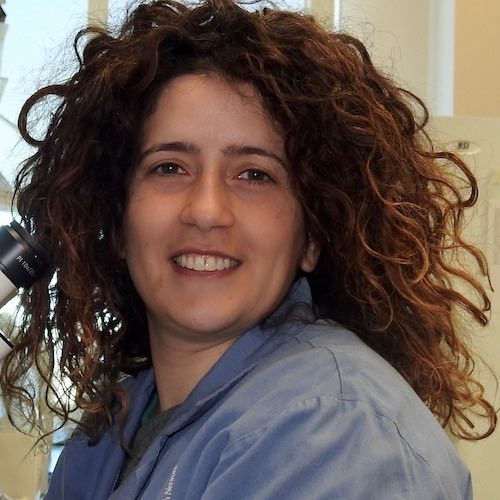
Marc Angeli
Lab Manager
Marc received his Bachelor of Science from New Mexico State University, he then moved on to Graduate studies in Biotechnology at Johns Hopkins University. During that time, he worked at the Walter Reed Army institute of Research studying breast and prostate cancer looking for novel genetic interactions in both.
Over the years, he has gained extensive experience in industrial, clinical and academic research utilizing a wide variety of methodologies. Before coming to the McGaha lab his focus was on Hepatocellular Carcinoma biology and the microbiome’s influence over post-transplant pathology. Although primarily focusing on managing the implementation of all lab projections, he is involved in the development new model systems for the lab.
Laboratory Members

Tracy McGaha, PhD

Principal Investigator
Dr. McGaha obtained his Ph.D. in Immunology at the Icahn School of Medicine at Mount Sinai and completed postdoctoral training at Rockefeller University. He established his first lab as an Assistant Professor at Temple University, later moving to Georgia Regents University in 2008, and joined the Princess Margaret Cancer Centre as a Senior Scientist in 2015. His research focuses on immune tolerance induced by cell death, communication between innate and adaptive immune cells, and how tissue-resident macrophages regulate responses to apoptotic cells in autoimmunity and cancer.
Sara Lamorte, PhD
Scientific Associate
Dr. Lamorte received her PhD from the University of Turin (Italy). Her doctoral thesis analyzed the role of the tumor microenvironmentin cancer. She joined Dr. McGaha’s laboratory in 2016 to deepen the understanding of the role of myeloid cells such as macrophages in promoting tolerance against cancer. Macrophages are phagocytes found essentially in all tissues with the role of engulfing and digesting not only foreign substances, but also apoptotic cells generated under homeostatic conditions. Clearance of apoptotic cell is essential for maintenance of tolerance of self-antigen. Dr. Lamorte hypothesizes that clearance of apoptotic cells, generated after chemotherapeutic treatment, will initiate a tolerogenic response against the tumor triggered by macrophages and involving recruitment of regulatory T cells as well as suppression of cytotoxic lymphocyte T activity. She is particularly interested in the pathways activated in macrophages by the process of apoptotic cell clearance and the possibility of developing targets inhibiting these pathways as adjuvant therapy in cancer treatment
Senior Bioinformatics Analyst
Dr. Quevedo received his PhD in Medical Biophysics from the University of Toronto. His doctoral thesis focused on modelling the mechanistic and therapeutic roles that allele-specific copy number alterations have in cancer. He joined Dr. McGaha’s lab in 2021 to apply his computational expertise and machine learning approaches to studying autoimmunity.Within the McGaha lab, he primarily focuses on assisting members of the lab to process and analyze their data, as well as working in collaborative efforts with other labs. He is involved in the development of standardized workflows, building novel algorithms, analysis and data-visualization of data from single-cell multiomics (RNA, ATAC, VDJ), bulk RNA-Seq, CUT&RUN, ATAC-Seq, shotgun metagenomics and V3-V4 16S rRNA sequencing.


Muhammad Umair, PhD
Postdoctoral Scientist
Emeline Kerreneur, PhD
Dr. Umair received his PhD in Molecular Medicine at Université Laval in Quebec City, where my research focused on chronic CNS autoimmunity, with an emphasis on sex differences in Th17 cell biology and their role in disease progression. This work laid the foundation for my interest in cancer immunology, which represents a complementary aspect of immune regulation. He also holds PharmD and an M.Phil in Pharmacology and Toxicology from Pakistan. His research focuses is on identifying and characterizing genes that mediate immune evasion in pancreatic ductal adenocarcinoma (PDAC). In parallel, I am interested in discovering tumor-specific antigens and developing targeted therapeutic strategies to enhance anti-tumor immunity in PDAC.
Postdoctoral Scientist
Luke Neufeld
Dr. Kerreneur received her PhD at the Mediterranean Center for Molecular Medicine (C3M, Nice, France), where
my research focused on the characterization and therapeutic reprogramming of anti-inflammatory
macrophages in physiological settings and myeloid leukemias. With a deep interest in immuno-oncology, I
aim to decipher how myeloid immune cells, particularly macrophages, shape the tumor microenvironment
to develop innovative therapeutic strategies.
PhD Student
Robbie Jin
Luke received his BSc in Biochemistry (Honours) with a Minor in Business from the University of Victoria. During his final year he completed an immunology focused undergraduate thesis under the supervision of Dr. Brad Nelson at the BC Cancer Agency’s Deeley Research Centre. Luke’s thesis focused on improving adoptive cell therapy using alternative techniques for human T cell culture. He began his PhD at the University of Toronto in 2018, joining Dr. McGaha’s lab at the Princess Margaret
Cancer Centre.
Robbie received his Bachelor of Medical Science with an Honours Specialization in Microbiology and Immunology from Western University in 2020. He was first introduced to the research world as a summer research student in the lab of Dr. Susan Poutanen at Mount Sinai Hospital, Toronto. There, he primarily focused on evaluating an assay for vancomycin detection from a stool matrix. During his undergraduate studies, he completed a year-long internship at Sanofi Pasteur's Immunology platform, where he worked on developing an antigenicity assay to assess the quality of vaccine antigens produced on site. In his final year at Western University, he completed an undergraduate thesis under the supervision of Dr. Steven Kerfoot, where he focused on comparing several mouse models of multiple sclerosis at the chronic stage of disease. He began his PhD in Immunology at the University of Toronto in 2020, joining Dr. Tracy McGaha’s lab at the Princess Margaret Cancer Centre. He is studying the interaction between tumour-associated macrophages and organoids derived from pancreatic cancer patients.
PhD Student


Scientific Associate
Kitty Liu
Kitty received her HBSc in Immunology (Specialist) from the University of Toronto. Her interest in cancer immunology began in her undergraduate thesis in the lab of Dr. Pamela Ohashi at Princess Margaret Cancer Centre. Her thesis was focused on elucidating mechanisms by which CD8+ T cells may resist immunosuppression by regulatory T cells in the context of cancer. After completing her undergraduate studies, she began her PhD in 2019 in Dr. Tracy McGaha’s lab at the Princess Margaret Cancer Centre.
She is currently investigating the interaction between CD8+ T cells and the microbiome in pancreatic ductal adenocarcinoma. Her research project aims to provide insights into how the microbiome may shape the CD8+ T cell anti-tumour response and ultimately, identify novel immunotherapy via modulation of the microbiome-immunity axis.
PhD Student
PhD Student
Matthew Bianca
Shannon MacKenzie
Matthew received his Bachelor of Science with an Honours Specialization in Biology and Pharmacology from McMaster
University. During his undergraduate studies, he had the opportunity to conduct research in various experimental fields including
radiation biology and respiratory mucosal immunology. Matthew completed an undergraduate thesis within the Firestone
Institute for Respiratory Health where he evaluated the ability of pharmacological compounds to potentiate the cystic fibrosis transmembrane conductance regulator.
Research Technician
Shannon received her BSc in Biology from the University of Pittsburgh. She then went on to become an RVT followed by an RLAT.
After graduation, she became a Veterinary Technologist at the University of Toronto where she gained extensive knowledge in a variety of animal models and techniques. Shannon joined the McGaha lab in February 2022 as a research technician and will be managing the labs animal colony and helping in the development of new animal models.
Former Lab Members
M. Teresa Ciudad, PhD 2016-2025
Current Position: Scientific Application Specialist, Research Core Facilities - Unity Health. Toronto, canada
Cristiane Naffah de Souza, PhD 2021-2024
Current Position: Flow Specialist, PMCRT flow facility, Sick Kids, Toronto, Canada
Xin Zhang, PhD 2018-2024
Current Position: Research Associate, Mak Lab, University Health Netowrk. Toronto, Canada
Nadine Nzirorera, MSc 2021-2024
Marie-jo Halaby, PhD 2015 – 2021
Current Position: Field Application Scientist at Beckman Coulter Life Sciences. Toronto, Canada
Priya Makhijani, MSc 2018 – 2021
Current Position: PhD Candidate. University of Toronto, Canada
Zeynep Kahramanoğlu, MSc 2018 – 2021
Current Position: Scientific Communications Specialist at The Princess Margaret Cancer Foundation. Toronto, Canada
Kebria Hezaveh, PhD. 2016 – 2021
Current Position: NGS Biomarker Scientist at AstraZeneca. Gothenburg, Sweden
Russell Dickson, PhD 2017 – 2019
Current Position: Bioinformatics at F. Hoffmann-La Roche Ltd. Mississauga, Canada
Rahul Shinde, DVM, PhD. 2011-2018
Current Position: Assistant Professor, The Wistar institute. Philadelphia, PA, USA
Buvana Ravishankar, PhD. 2010-2015
Current Position: Scientist, AbbVie. Chigaco, IL, USA
Kapil Chaudhary, MD, PhD. 2010-2015
Current Position: Physician Scientist, Thomas Jefferson University. Philadelphia, PA, USA
Jillian Bradley, PhD. 2010-2015
Current Position: Assistant Professor, Edward Via College of Osteopathic Medicine. Spartanburg, SC, USA
Haiyun Liu, PhD. 2009-2014
Current Position: Scientist II at NexImmune, Gaithersburg, MD, USA